
We often assume therapy is all about skills, speech clarity, behavior regulation, and motor milestones.
But if we look closer, something else is happening beneath the surface. Something more powerful, more enduring.
Children are absorbing lessons that no one writes down. They’re not just learning what to say or how to move, they’re internalizing who they are, what they’re worth, and whether they belong.
This is the invisible curriculum.
And it matters as much, maybe more, than the written one.
Therapy Isn’t Just a Service. It’s a Social Mirror.
Let’s be honest: most therapy goals focus on function- what the child can do.
But what about how they feel while doing it?
When an SLP celebrates a child’s nonverbal gestures, that child learns they are heard, even without words.
When an OT allows stimming without judgment, the child learns their body isn’t “wrong.”
When a BCBA co-regulates with empathy, not just reinforcement, the child learns safety can be shared.
When a PT slows down for a child’s emotional pace, not just physical progress, the child learns resilience and is allowed to catch their breath.
These are the unspoken lessons that last, the invisible curriculum beneath the plan of care.
As Harvard’s Graduate School of Education puts it, “Children don’t just learn what we teach. They learn how we treat them while we teach” (Navigating Social and Emotional Learning from the Inside Out, 2023).
Social Learning Isn’t an Add-On. It’s the Foundation.
Developmental psychology backs this up. Albert Bandura’s social learning theory reminds us: we learn through observation. Through modeling. Through the quiet cues adults give.
So when a therapist fumbles with a toy and laughs at their own mistake? That’s modeling self-kindness.
When a therapist waits quietly for a child to answer, without pressure or interruption, that’s modeling respect.
It’s not just the task. It’s how the task is offered. That’s what children take with them into the world.
And they don’t forget.
Every Therapy Discipline Teaches More Than It Says
Here’s where it gets exciting, and deeply human.
- SLPs don’t just teach speech. They teach kids that their voice matters, even if it’s AAC or gestures.
- BCBAs don’t just shape behavior. They shape how children interpret social expectations and whether they feel punished or empowered.
- OTs don’t just support sensory integration. They teach that our bodies are wise, not wrong.
- PTs don’t just guide gross motor progress. They teach that progress honors pacing.
- Mental health therapists don’t just help regulate emotions. They create a space where all emotions are welcome, and none are too big.
When these professionals collaborate, not just on goals, but on meaning, they form a social scaffolding that holds up the child’s developing sense of self.
What This Looks Like in Real Life
Let’s make it tangible.
A child enters therapy and chooses not to speak. The SLP doesn’t push. Instead, they offer crayons and paper. The child draws. The therapist responds to the drawing like it’s the clearest voice in the room.
That’s not just accommodation. That’s dignity.
Or imagine a child rocking gently in their seat. The OT doesn’t stop it. They narrate: “That movement helps your body feel safe.” No shame. Just validation.
Or a child cries during PT, overwhelmed. The therapist kneels, stays close, and says, “We’ll pause. You’re not alone in this.” They didn’t just address a breakdown. They offered co-regulation and rewrote a trauma response.
None of these responses were clinical mandates. They were human decisions.
And they taught the most important lesson of all:
You are safe here. You are seen here.
Research Reinforces What We Feel in Our Bones
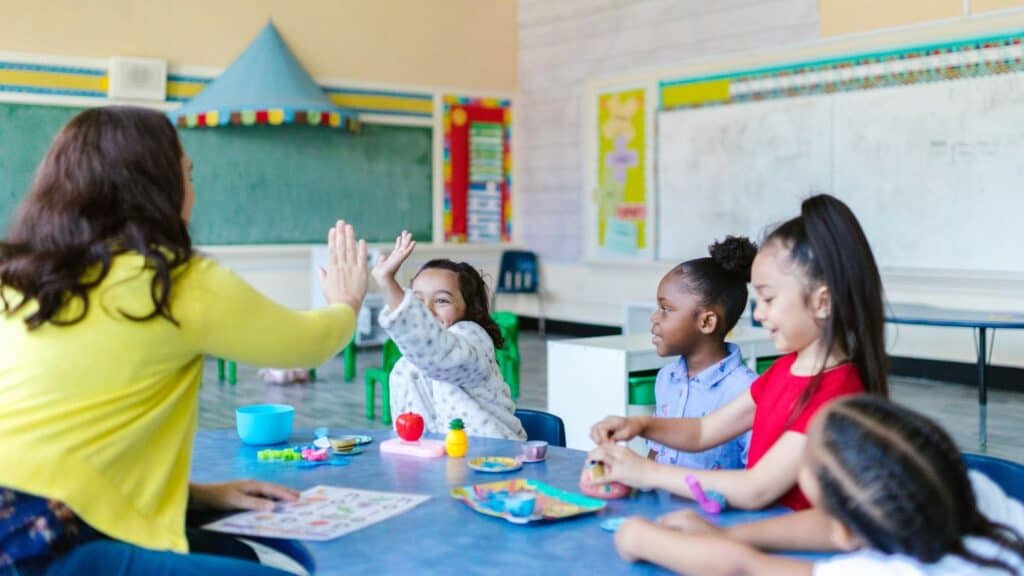
This isn’t just feel-good talk. It’s rooted in evidence.
The journal Future of Children highlights that social-emotional learning (SEL) plays a central role in both school and life outcomes, helping children build resilience, empathy, and belonging.
The American Psychological Association has shown that children internalize messages from their learning environments more powerfully than we realize, especially when those environments are consistent and relational.
And in occupational therapy literature, collaborative and holistic approaches have been found to increase generalization of skills, parent satisfaction, and long-term functional outcomes (American Journal of Occupational Therapy, 2020).
Even the concept of the “hidden curriculum”, long studied in educational psychology, confirms that children absorb cues about authority, identity, and social belonging through unspoken norms, not just formal instruction.
Therapy isn’t outside this dynamic. It’s part of it. And when done well, it can disrupt shame-based narratives that many neurodivergent children experience far too early.
Making the Invisible Curriculum… Visible
So, how do we honor this invisible curriculum on purpose?
1. Acknowledge It
Say it out loud. “In this space, it’s okay to go slow.” Or, “I care more about you feeling safe than about you finishing that task.” Let the child hear what you value.
2. Align the Team
Let every therapy discipline ask: What story are we helping this child tell about themselves? Let collaboration go beyond logistics and into meaning-making.
3. Coach the Family on Invisible Wins
Help parents see more than compliance. Celebrate emotional regulation. Celebrate assertiveness. Celebrate moments when the child said “no” with clarity, that’s communication, too.
4. Hold the Mirror Up for Ourselves
Therapists are also part of the curriculum. What does our tone teach? What does our body language suggest? We don’t just deliver interventions. We model values.
A Final Thought: This Is Bigger Than Progress Reports
No family frames a child’s identity with a data sheet.
No child looks back and says, “I remember my therapist because I mastered sequencing.”
They remember:
“She waited for me.”
“He laughed with me, not at me.”
“They didn’t rush me out of a meltdown.”
“They saw the real me, even when I couldn’t speak it.”
That’s the therapy that changes lives. That’s the invisible curriculum.
Let’s not let it remain invisible any longer.