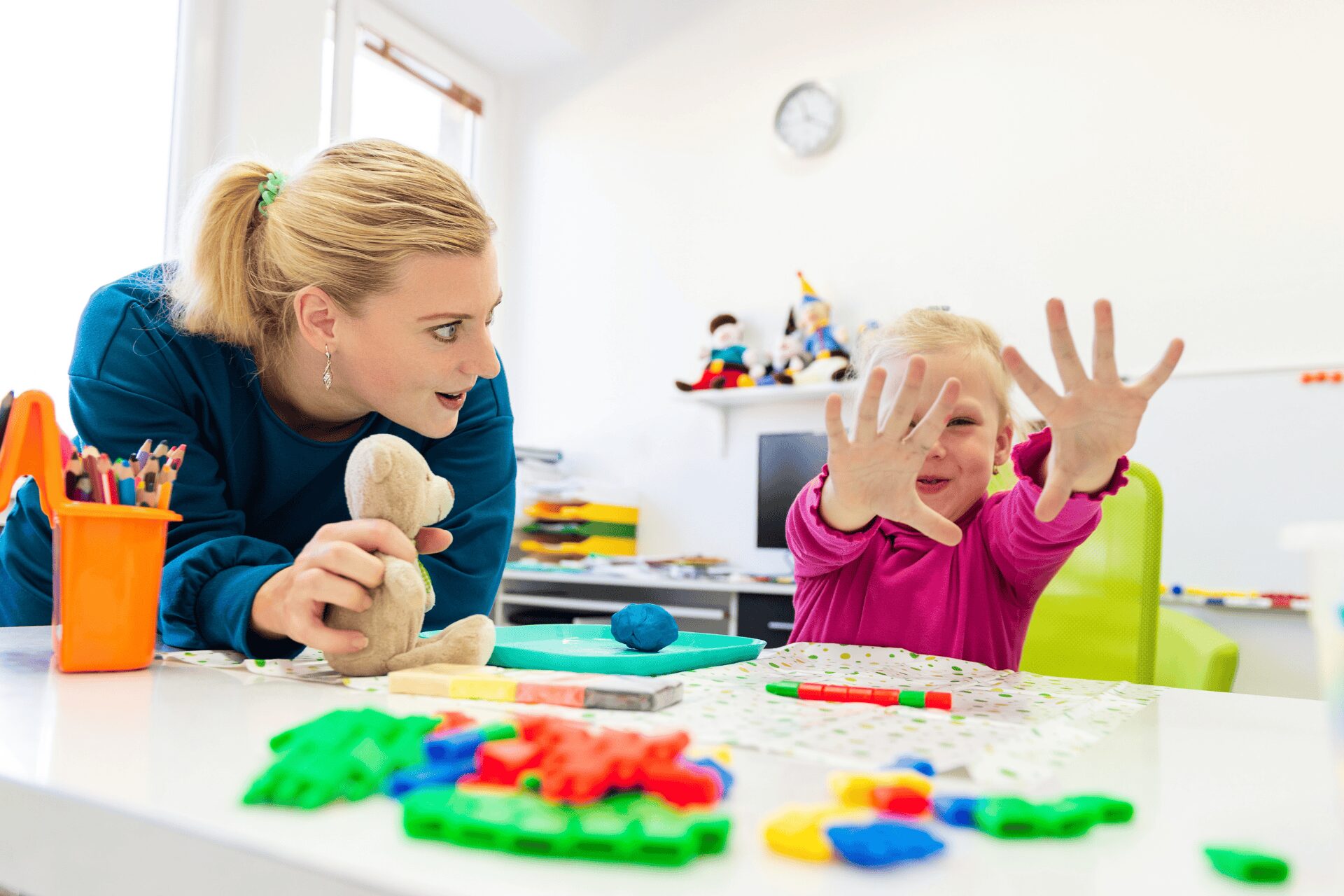
The hidden power of occupational therapy is not found in a clinic room. It shows up in the quiet, everyday moments most people overlook.
It is the child who buttons their shirt without frustration.
The child who joins a game at recess instead of watching from the sidelines.
The child who makes it through dinner without melting down.
These moments rarely make headlines. But they change everything.
What the Hidden Power of Occupational Therapy Really Means
Occupational therapy is often misunderstood as a set of exercises or activities. In reality, it is about helping children participate in life.
Not perfectly.
Not all at once.
But meaningfully.
The American Occupational Therapy Association defines occupational therapy as supporting individuals in the activities that occupy their daily lives, including play, learning, self-care, and social participation (AOTA, 2023).
That word matters. Participation.
Because for many children, especially those with sensory, developmental, or neurological differences, everyday tasks are not simple. They are complex, demanding, and sometimes overwhelming.
The Everyday Skills Most People Take for Granted
Getting Dressed Without a Battle
For some children, putting on socks feels like wearing sandpaper. Buttons require coordination that does not come naturally.
OT’s break these skills down into manageable steps. They strengthen fine motor control, build tolerance to textures, and create routines that reduce stress.
Over time, what once felt impossible becomes automatic.
Sitting Still Long Enough to Learn
Classrooms are not designed with every nervous system in mind. Some children need movement to focus. Others need deep pressure to feel grounded.
Occupational therapists help children find their regulation.
They may introduce movement breaks, adaptive seating, or sensory tools. The goal is not to force stillness. It is to create readiness.
Research from Harvard’s Center on the Developing Child shows that self-regulation is foundational for learning and academic success (Harvard University, 2022).
Playing With Other Kids
Play looks simple from the outside. Inside, it requires timing, coordination, communication, and emotional awareness.
OT’s help children understand how to enter play, stay in play, and enjoy play.
They collaborate closely with Speech Language Pathologists to support communication and with BCBAs to reinforce social engagement.
Because play is not just fun.
It is how children learn to belong.
Where Occupational Therapy Meets the Rest of the Team
The hidden power of occupational therapy becomes even stronger when it connects with other disciplines.
No child develops in one lane.
Speech Language Pathologists Build the Voice
SLPs help children express needs, thoughts, and emotions.
When communication improves, frustration decreases.
When frustration decreases, regulation becomes easier.
OT and speech therapy together create a bridge between the body and the voice.
Behavior Analysts Shape Learning Environments
BCBAs analyze patterns and design strategies that support learning.
When paired with OT, behavior plans become more effective because they account for sensory needs, not just observable actions.
Behavior is no longer something to manage.
It becomes something to understand.
Mental Health Therapists Support Emotional Growth
Emotional regulation is deeply connected to sensory regulation.
Mental health therapists help children recognize feelings and build coping strategies, while OTs support the physical side of regulation.
Together, they create stability from the inside out.
Physical Therapists Build the Foundation
Posture, balance, and coordination influence everything from handwriting to attention.
Physical therapists strengthen the body.
OTs refine how the body is used in everyday tasks.
It is a natural partnership.
The National Institutes of Health emphasizes that multidisciplinary approaches improve functional outcomes for children with developmental challenges (NIH, 2023).
Why Sensory Processing is Often the Missing Piece
Understanding the Sensory System
Some children experience the world as too loud, too bright, or too fast. Others seek more input to feel regulated.
This is sensory processing.
Occupational therapists are trained to identify these patterns and create strategies that help the nervous system find balance.
Preventing Meltdowns Before They Start
A meltdown rarely begins in the moment it is seen.
It builds over time.
OTs look for early signals.
They design proactive supports like movement breaks, calming routines, and environmental adjustments that reduce overload before it peaks.
The Centers for Disease Control and Prevention highlights that early intervention targeting sensory and adaptive skills improves long-term outcomes (CDC, 2022)
How Occupational Therapy Extends Beyond the Clinic
The real impact of occupational therapy is not measured in sessions. It is measured in real life.
At Home
Morning routines become smoother.
Mealtimes become less stressful.
Bedtime becomes more predictable.
Parents often shift from reacting to behaviors to understand them
At School
Children engage more consistently.
Transitions become manageable.
Learning becomes accessible.
Teachers gain strategies that support the entire classroom, not just one child.
In the Community
Trips to the grocery store feel possible.
Family outings feel enjoyable again.
Independence begins to grow.
These are the moments families remember.
Where Families Can Learn More
Families often begin exploring occupational therapy when everyday routines feel harder than they should.
Resources like K1ds Count Therapy provide insight into how multidisciplinary therapy supports children across home, school, and community environments.
For those specifically exploring sensory and daily living skill development, pages like Occupational Therapy Services and Sensory Integration Support can help families better understand available approaches.
Understanding the options is often the first step toward meaningful change.
The Bigger Truth About Occupational Therapy
The hidden power of occupational therapy is not about fixing children.
It is about unlocking their ability to participate in the world around them.
To dress themselves.
To play with others.
To learn with confidence.
To navigate environments that once felt overwhelming
It is not loud work.
It is not always visible.
But it is transformative.
Because when a child masters the small things, they gain the confidence to take on the big ones.
And that is where independence begins.