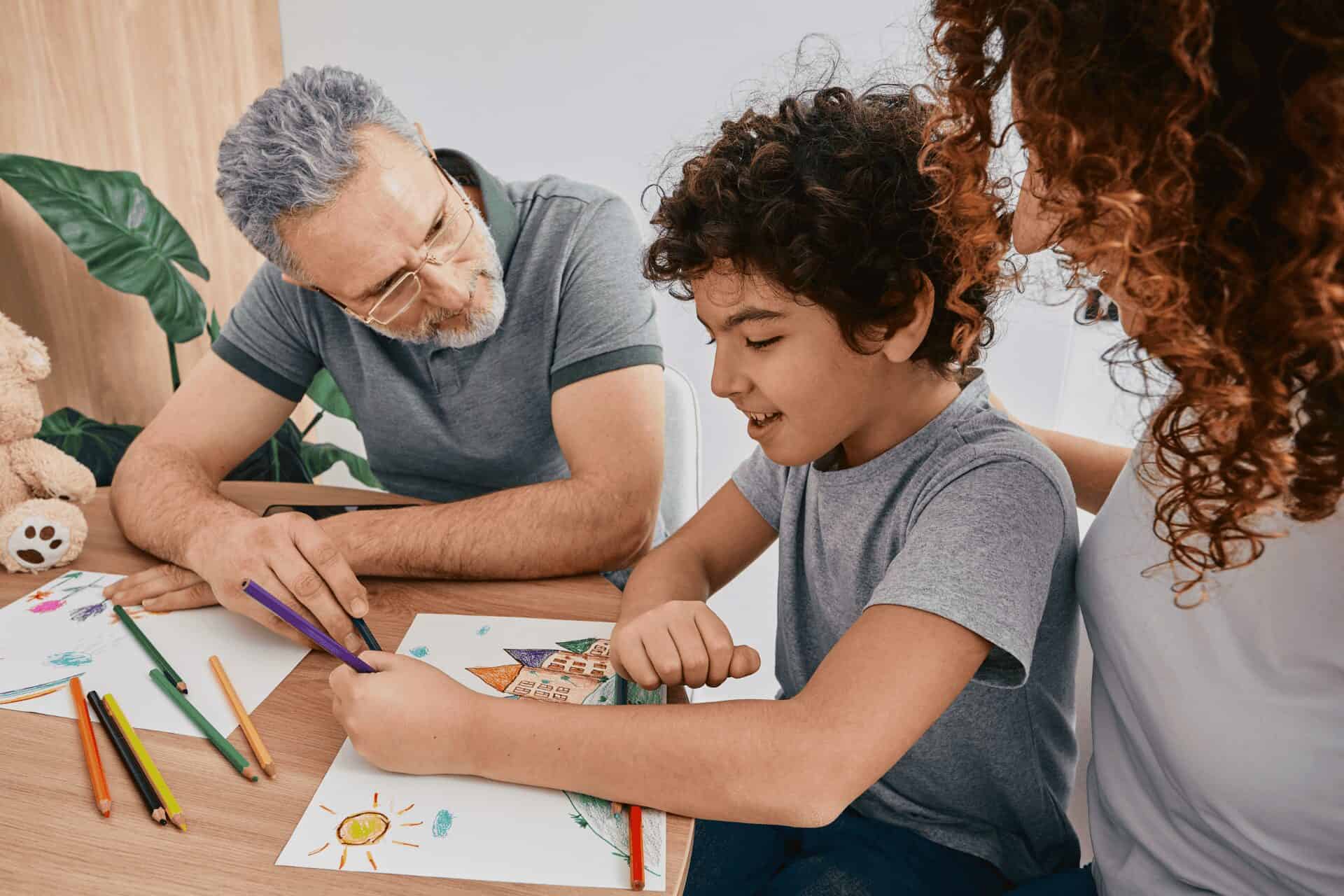
How to talk about therapy with your child without fear or shame is not a script you memorize.
It is a tone you create.
A feeling.
A sense of safety.
A quiet message that says, “There is nothing wrong with you. We are here to help you grow.”
Children hear more than our words.
They hear how we feel about what we are saying.
And when therapy is introduced with tension, they feel it.
When it is introduced with confidence and calm, they feel that too.
Why How to Talk About Therapy with Your Child Without Fear or Shame Matters
The first conversation about therapy often shapes everything that follows.
If a child senses that therapy is something to fix them, they may resist it.
If they sense it is something that supports them, they begin to accept it.
The American Academy of Pediatrics emphasizes that a child’s perception of care significantly impacts engagement and long term outcomes (AAP, 2023)
This is not about choosing the perfect words.
It is about creating the right emotional context.
Start with What Your Child Already Feels
Children Know When Something Is Different
Most children, especially those who need support, already know that certain things feel harder for them.
They notice when communication is frustrating.
They notice when their body feels out of control.
They notice when social situations feel confusing.
You do not need to introduce this awareness.
It is already there.
Give Language Without Labels
Instead of starting with diagnoses or clinical terms, start with experiences.
You might say:
“Sometimes your body feels really busy, right?”
“Sometimes it is hard to find the right words.”
This connects with what the child already understands.
Speech Language Pathologists often help families introduce communication challenges in ways that feel relatable and non-threatening.
The goal is not an explanation.
The goal is recognition.
Frame Therapy as Support, Not Correction
Therapy Is Something We Do With You, Not To You
Children quickly pick up on whether therapy feels like something being done to them or
Something being done for them.
The difference is subtle, but powerful.
“We are going to therapy to help you” feels very different than
“We are going to therapy so you can learn in ways that feel easier.”
That shift changes everything.
Normalize Therapy as Part of Life
Children see doctors, teachers, coaches, and mentors. Therapy fits naturally into that world.
Occupational Therapists help your body feel more comfortable.
Speech therapists help your words come out more easily.
Behavior therapists help you learn new ways to do things.
Mental health therapists help with big feelings.
When therapy is normalized, it loses its weight.
The Centers for Disease Control and Prevention highlights that early, supportive interventions are most effective when children feel safe and engaged in the process (CDC, 2022).
Match the Message to the Therapy
Speech Therapy Builds Communication
Explain speech therapy in terms children understand.
“This is where you get help with your words, your talking, and your ideas.”
For children who struggle with communication, this often feels like relief, not resistance.
You can explore more about how communication is supported through services like Speech Therapy Services
Occupational Therapy Supports the Body
OT can be described as helping the body feel better and work better.
“This is where we help your hands, your body, and your senses feel more comfortable.”
Children who experience sensory challenges often connect quickly with this explanation.
Resources like
can help parents better understand how these supports work.
ABA Therapy Builds Learning and Confidence
Today’s ABA is about learning skills in ways that feel achievable.
“This is where we practice things that help make life easier, step by step.”
It is important that this is never framed as correcting behavior, but as building skills.
You can learn more about this approach at
Mental Health Support Helps with Big Feelings
Some children need help understanding emotions.
“This is where we learn what to do when feelings feel really big.”
This normalizes emotional support as a strength.
You can learn more about this approach at
Physical Therapy Builds Strength and Movement
For children who struggle with coordination or endurance, PT can be introduced simply.
“This helps your body get stronger so things feel easier.”
Every therapy has a purpose.
When children understand the purpose, they feel more in control.
You can learn more about this approach at
Watch Your Tone More Than Your Words
Children Read Emotion First
You can say all the right things, but if your tone carries worry, your child will hear worry.
You can say very simple things, but if your tone carries confidence, your child will feel safe.
This is why calm matters.
Confidence Builds Trust
When parents present therapy as something positive, children begin to trust the process.
Not immediately.
But gradually.
Harvard’s Center on the Developing Child notes that emotional safety and consistent adult responses are critical for building trust and supporting development (Harvard University, 2022).
Your presence becomes the anchor.
Let Your Child Have a Voice in the Process
Give Choices When Possible
Children feel safer when they have some control.
“Do you want to bring your favorite toy?”
“Do you want to sit here or there?”
These small choices matter.
Invite Questions Without Pressure
Some children will ask questions. Others will not.
Both are okay.
The goal is not to force understanding.
The goal is to keep the door open.
What to Do If Your Child Resists
Resistance Is Communication
If a child pushes back, it does not mean you handled the conversation wrong.
It means something feels uncertain.
That uncertainty could come from fear, sensory discomfort, or simply not knowing what
To expect.
Stay Steady, Not Reactive
Avoid trying to convince or correct
Instead, stay grounded.
“We will figure this out together.”
“I will be right there with you.”
That consistency matters more than any explanation.
The Bigger Truth
Talking about therapy is not a one-time conversation.
It is a series of moments.
Moments where your child learns that they are supported.
Moments where they feel understood.
Moments where they begin to trust the people around them.
Therapy is not about changing who they are.
It is about helping them navigate the world in a way that feels possible.
And how you talk about it shapes how they experience it.
The Takeaway
How to talk about therapy with your child without fear or shame comes down to one idea
You are not introducing a problem.
You are introducing support.
When children feel that difference, everything shifts.
They walk in with less fear.
They stay engaged longer.
They begin to see therapy not as something they have to do, but something that helps them grow.
And growth, when it feels safe, is something every child is ready for.