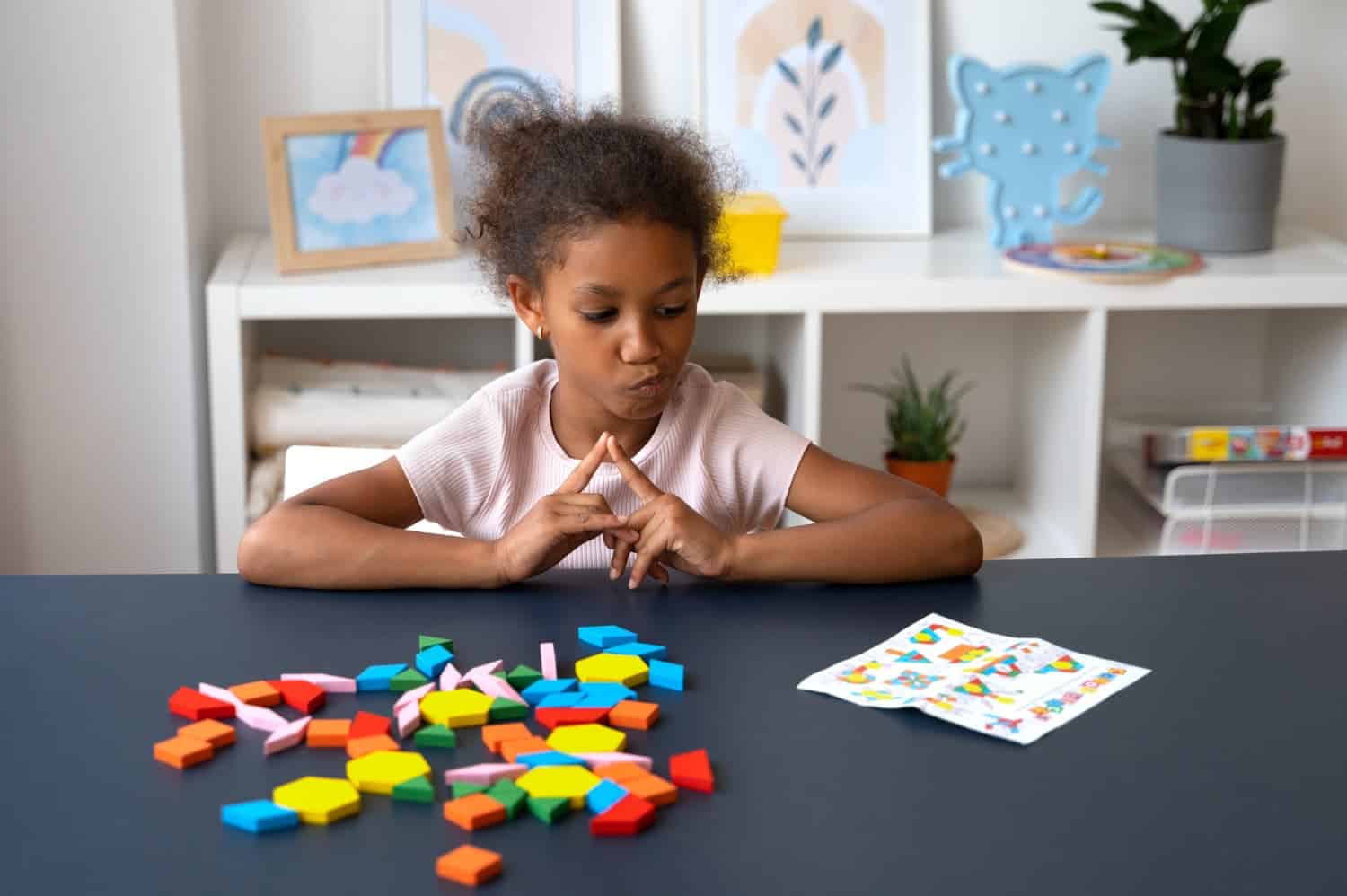
The first time anyone mentioned the word autism to Sarah’s parents, they nearly laughed.
“She’s nothing like that, “ her mother said gently. “She’s talkative, she’s bright, she has friends.”
And yet, beneath the surface, Sarah was exhausted. Every conversation felt rehearsed. Every social interaction, a quiet performance. She copied the other girls’ jokes, practiced smiles in the mirror, and forced herself to make eye contact until it was unbearable.
Sarah wasn’t trying to deceive anyone. She was trying to survive.
For decades, stories like Sarah’s went unseen. Because when people pictured autism, they often imagined something else, a young boy who lines up toys, avoids eye contact, and speaks in rigid tones. The image was narrow, incomplete, and mostly male.
But autism doesn’t wear one face. It never did.
The Masking Game
Girls on the autism spectrum often become experts at something that confuses even seasoned clinicians: masking.
Masking is the learned ability to imitate neurotypical behavior, mirroring gestures, forcing smiles, and rehearsing conversations, to avoid standing out.
It’s why so many autistic girls appear ‘social’ on the surface, yet collapse into exhaustion later. They’re performing in a world that wasn’t built for their wiring.
For example, a Cambridge Autism Research Centre–linked 2023 paper, Measuring the Autistic Women’s Experience, cites findings by Begeer et al. showing that girls are typically diagnosed 1.8 to 4.3 years later than boys. The reason isn’t that autism looks different in girls, it’s that we’ve been taught not to look for it in them.
Speech Language Pathologists (SLPs), Behavior Analysts (BCBAs), and Occupational Therapists (OTs) are often among the first to spot the clues. But even they can miss them when the signs appear quiet, adaptive, and socially “appropriate.”
Because in girls, autism doesn’t always shout. Sometimes it whispers.
The Quiet Signs
The clues can be subtle. So subtle that they often blend into what adults call ‘personality.’
An SLP might notice that a girl who speaks beautifully still struggles with back-and-forth conversation. Her language is advanced, but her communication feels rehearsed.
A BCBA might see a student who follows every rule, yet melts down at home where expectations loosen. The structure hides her distress until it’s gone.
An OT might observe how a girl avoids messy play or loud environments, not because she’s shy, but because her nervous system can’t filter the sensory overload.
A Physical Therapist might notice a child who moves with hesitation, avoids group games, or seems uncoordinated in sports, signs of dyspraxia that can accompany autism.
A Mental Health Therapist might hear a teenage girl describe deep loneliness despite being surrounded by friends. She blends in, but never feels she belongs.
These are not isolated quirks. They are patterns, each a thread in the broader tapestry of how autism manifests in girls.
The Social Chameleons
Many autistic girls grow up as social observers. They watch, mimic, and adapt.
When they’re young, this skill looks like maturity. Teachers praise their politeness and empathy. Parents are told they’re “such good helpers.”
But under the surface, constant self-monitoring takes a toll.
Research from the Journal of Autism in Adulthood also highlights that increased masking behaviors are strongly associated with higher rates of anxiety, depression, and burnout among autistic individuals.
Imagine spending your whole childhood trying to remember the rules of a game that everyone else seems to know instinctively. That’s what social life can feel like for many autistic girls.
And by adolescence, the cost of that performance becomes hard to ignore.
READ MORE: Sensory Processing Disorder in Children with Autism
When Perfection Becomes Protection
Another overlooked pattern is perfectionism. Many autistic girls use achievement as a shield, trying to control an unpredictable world through flawless grades, tidy handwriting, and relentless effort.
They may obsess over details, fixate on routines, or spiral if something feels ‘off.’
To the outside world, they look disciplined. Inside, they’re often fighting anxiety.
Mental Health Therapists working with autistic teens often note how perfectionism can hide emotional distress. It’s not just about control, it’s about safety.
One therapist put it simply: “For some girls, being perfect feels like the only way to belong.”
The Emotional Landscape
If you ask parents what they notice most, many describe their daughters as intense.
Deeply sensitive. Deeply empathetic. Deeply affected by things others shrug off.
This emotional depth isn’t a flaw. It’s part of the brilliance of the autistic mind. But it can also make girls more vulnerable to social pain, rejection, and bullying.
An OT might see a child who craves sensory comfort, weighted blankets, soft textures, and deep hugs to soothe her nervous system. A Mental Health Therapist might see the same need expressed through anxiety or withdrawal.
Different lenses, same story: the world feels louder to her.
Why So Many Girls Go Undiagnosed
One reason so many autistic girls are overlooked is that early diagnostic criteria were based almost entirely on studies of boys in the 1980s and 1990s. Research published in Sex Differences in Autism Spectrum Disorders (PMC, 2014) notes that early autism studies were strongly male-biased, with little attention given to how autism manifests in females.
The social differences in girls, such as reciprocal play, empathy, and imaginative interests, didn’t fit the model.
Girls who love books, animals, or art were often seen as “shy” or “gifted.” Their special interests seemed normal until you looked closer and saw the intensity beneath them.
A girl who talks endlessly about horses, anime, or social justice isn’t just passionate. She might be communicating comfort through structure, memorization, and predictability.
But because those interests appear ‘socially acceptable,’ they’re rarely flagged as autistic traits.
So she grows up misunderstood, competent but disconnected, praised but unseen.
READ MORE: The Importance of Eye Contact for Children with Autism
What Helps
Recognizing these patterns early can change everything.
An SLP might use role-play to help a child practice flexible conversation without pressure.
A BCBA might build routines that reward self-advocacy rather than compliance.
An OT might design sensory supports that help regulate emotions before meltdowns happen.
A Physical Therapist might build coordination and body awareness through rhythm and movement.
A Mental Health Therapist might help her unmask safely, learning that her authentic self is enough.
When these disciplines collaborate, they do more than treat symptoms; they rewrite the story.
Because the goal isn’t to make autistic girls blend in better. It’s to help them be better understood.
Listening Differently
When a child retreats to her room after school, it might not be defiance; it might be sensory recovery. When she corrects adults or insists on fairness, it might not be attitude; it might be integrity.
Autistic girls see the world through patterns, fairness, and emotion. When we rush to change that, we erase what makes them remarkable.
So the real challenge isn’t to find the loudest signs, it’s to listen for the quiet ones.
A Final Thought
Some of the brightest, kindest, most intuitive women I know didn’t discover they were autistic until adulthood. For them, diagnosis wasn’t a label; it was a language.
It gave them permission to stop performing.
And when they stopped performing, they started living.
The world doesn’t need more girls who learn to hide their differences. It needs more spaces where differences are seen as strengths.
Because when we learn to recognize the signs of autism in girls, not just the obvious ones, but the quiet ones, we don’t just change how we diagnose. We change how we see.
And seeing clearly, in the end, is where understanding begins.